


Bumper Plates vs Iron Plates: Which Should You Buy for a Home Gym?
When you’re setting up a home gym, choosing weight plates might seem pretty straightforward. You need the right weight, a barbell that fits, and you’re ready to train. But once you start looking at bumper plates and iron plates, you’ll notice a few differences that can affect your workouts.
Bumper plates are made from rubber and are designed to handle impact. Iron plates are more compact and usually cost less. Both work well for strength training, but the better choice depends on the exercises you do, your budget and where you train.
Here’s what to consider before buying weight plates for your home gym.
Bumper Plates vs Iron Plates: What Is the Difference?
The biggest difference comes down to how the plates are made and how they handle being dropped.
Bumper plates use dense rubber to absorb impact, while iron plates are made from metal and are better suited to controlled lifts. There are also differences in noise, size and price.
| Feature | Bumper Plates | Iron Plates |
|---|---|---|
| Material | Dense rubber | Cast iron or metal |
| Impact | Designed to absorb impact | Can damage floors if dropped |
| Noise | Generally quieter | Louder when dropped or placed down |
| Size | Often the same diameter across different weights | Diameter usually varies by weight |
| Barbell space | Can take up more sleeve space | Usually more compact |
| Price | Generally more expensive | Usually more budget-friendly |
| Best suited for | Olympic lifts, dynamic training and controlled drops | Traditional strength training |
Neither type is the right choice for everyone. If you mostly lift weights without dropping the bar, iron plates may be all you need. If your workouts involve more dynamic movements, bumper plates are worth a closer look.
What Are Bumper Plates?
Bumper plates are made mainly from dense rubber, with a metal insert in the centre that fits onto a barbell. They’re designed to take the impact when a loaded bar is dropped, which is why they’re commonly used for Olympic weightlifting.
Why Choose Bumper Plates?
They’re made for lifts where the bar comes down hard
Exercises such as cleans and snatches often involve dropping the bar after a lift. Bumper plates are designed for this kind of training and help absorb the impact.
They can be quieter in a home gym
Rubber plates tend to make less noise than iron plates when they hit the floor. If you train in a garage, apartment or shared space, that can make a difference.
The plates sit at a consistent height
Many bumper plates have the same diameter, regardless of their weight. This means the bar stays at a similar height off the floor when you’re using lighter or heavier loads.
They work for more than Olympic lifting
You can use bumper plates for squats, deadlifts, presses and plenty of other strength exercises. They’re a good option if your workouts include a mix of traditional lifting and more dynamic movements.
Are There Any Downsides?
Bumper plates usually cost more than iron plates. They can also be thicker, which means you may run out of barbell sleeve space sooner when loading heavier weights.
And while they’re designed to handle impact, they don’t make every floor suitable for dropping weights. Your flooring still needs to be able to handle the force.
What Are Iron Plates?
Iron plates are the traditional weight plates you’ll find in many gyms. They’re usually made from cast iron or similar metal and are a common choice for home strength training.
If your workouts mainly involve exercises such as squats, bench presses, rows and controlled deadlifts, iron plates can be a practical option.
Why Choose Iron Plates?
They’re usually easier on the budget
Iron plates generally cost less than bumper plates. If you’re building your home gym from scratch, that can leave more room in your budget for other equipment.
They take up less space on the bar
Iron plates are often thinner than bumper plates of the same weight. This is useful when you’re lifting heavier loads and need to fit more weight onto the barbell.
They’re a good fit for traditional strength training
You don’t need bumper plates for every workout. If you’re lifting and lowering the bar under control, iron plates can do the job without paying extra for impact protection you may not use.
What Should You Keep in Mind?
Iron plates can be noisy, especially when they come into contact with each other or the floor. Dropping them can also damage the plates or your flooring.
If you train at home, it’s worth thinking about where your gym is set up and whether you’ll be lowering the weights carefully or dropping them after a lift.
Which Weight Plates Should You Choose for Your Home Gym?
The easiest way to decide is to think about how you actually train.
| Your Training Setup | Recommended Plate Type | Why |
|---|---|---|
| Traditional strength training | Iron plates | A cost-effective option for controlled lifts |
| Olympic weightlifting | Bumper plates | Designed to handle drops during dynamic lifts |
| Home gym in a shared space | Bumper plates | Can help reduce impact noise |
| Limited barbell sleeve space | Iron plates | Their thinner profile can fit more weight |
| Mixed strength and functional training | Bumper plates | Useful for a wider range of movements |
| Budget-focused home gym | Iron plates | Often provide good value for basic training |
These are general guidelines, not strict rules. If you do a bit of everything, bumper plates may be worth the extra cost. If you mainly focus on controlled strength exercises, iron plates can be a sensible place to start.
Can You Mix Bumper Plates and Iron Plates?
Yes, you can use both types in the same home gym. Some people start with bumper plates and add iron plates as they need more weight. Others use iron plates for regular strength training and keep bumper plates for exercises where the bar might be dropped.
It can be a practical way to manage your budget and make better use of your barbell’s available space.
Just make sure the plates fit your bar properly and that the weight is balanced on both sides. If you plan to drop the bar, remember that adding iron plates to the setup doesn’t make those plates suitable for impact.
How to Choose the Right Weight Plates
Before you buy, it helps to check a few things beyond the price.
1. Think About Your Workouts
What do you do most often? If your routine is mainly squats, bench presses, rows and controlled deadlifts, iron plates may be enough. If you include Olympic lifts or exercises where you drop the bar, bumper plates make more sense.
2. Work Out Your Budget
Look at the total cost of the weight you need, rather than just the price of one plate. You may find that starting with a smaller set and adding more weight over time works better for your budget.
3. Check That They Fit Your Barbell
Weight plates come with different centre hole sizes. Make sure the plates you choose are compatible with your barbell. Standard and Olympic-sized plates aren’t interchangeable unless your bar is designed to fit both.
4. Consider How Much Space You Have
Think about how much weight you’ll need and how much room your barbell sleeves have. Iron plates are usually thinner, which can be helpful if you plan to lift heavier loads.
5. Don’t Forget Your Flooring
Your home gym floor matters, especially if you’re lifting heavy. Rubber gym flooring or lifting mats can help protect the surface, but the level of protection you need depends on your workouts and whether you drop the bar.
Bumper Plates vs Iron Plates FAQs
Are bumper plates worth it for a home gym?
They are worth it if you do Olympic lifts, drop the bar or train where noise matters. If you only lift under control, iron plates may do the job for less.
Can you drop iron plates?
It is best not to. Dropping iron plates can damage the plates, the bar and your floor. Lower them under control, or use bumper plates for lifts where the bar comes down hard.
Do bumper plates fit any barbell?
No. Check that the centre hole matches your bar, because standard and Olympic plates are not interchangeable. Our guide to Olympic vs standard weight plates explains the difference.
Do you still need flooring with bumper plates?
Yes. Bumper plates absorb impact, but they do not make every floor safe for dropped weights. Rubber flooring or lifting mats help protect the surface.
The Right Plates Come Down to Your Training
You don’t necessarily need to spend more to get the right weight plates. If you mainly do controlled strength exercises, iron plates can be a straightforward and budget-friendly choice. If your workouts involve Olympic lifts or dropping the bar, bumper plates are worth considering.
Think about your training, the space you have and how much weight you’ll need in the long run. That should give you a clearer idea of which plates will work best in your home gym.
Find the Right Weight Plates for Your Home Gym
Whether you’re setting up your first home gym or adding to the equipment you already have, the right weight plates should suit the way you train.
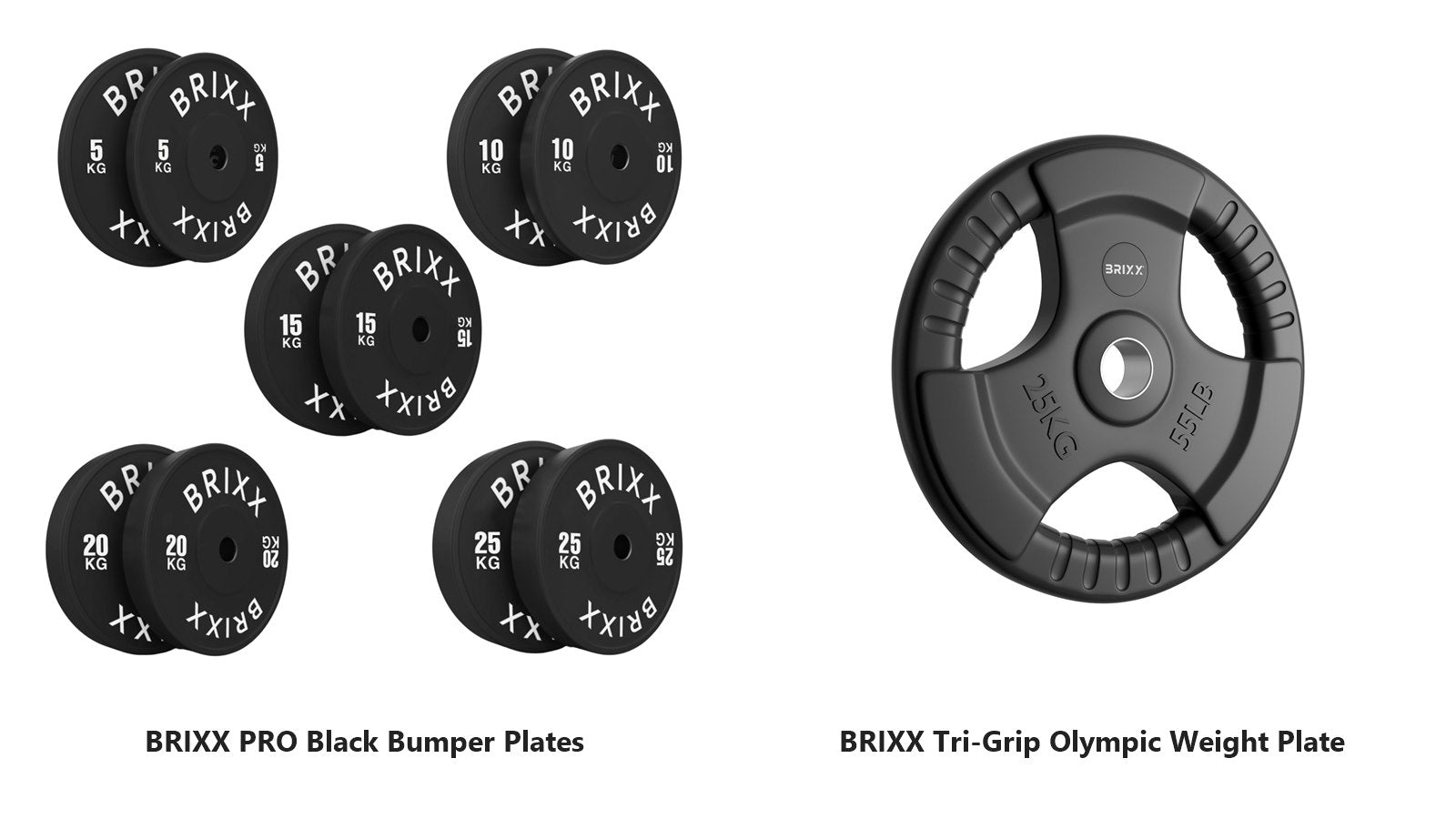
Explore the weight plates available at BRIXX Fitness and find an option that fits your setup, training style and budget. Our range includes rubber Olympic bumper plates and rubber Tri-Grip plates.
Shop the gear in this post
 BRIXX Olympic 20kg 2.2m Barbell + Collars
$195.00
View product
 BRIXX Olympic 12kg 1.8m Barbell + Collars
$140.00
View product
 BRIXX 20kg Camo Cerakote Olympic Barbell + Collars
$280.00
View product