


Functional Trainer Buying Guide: How to Choose the Right Machine
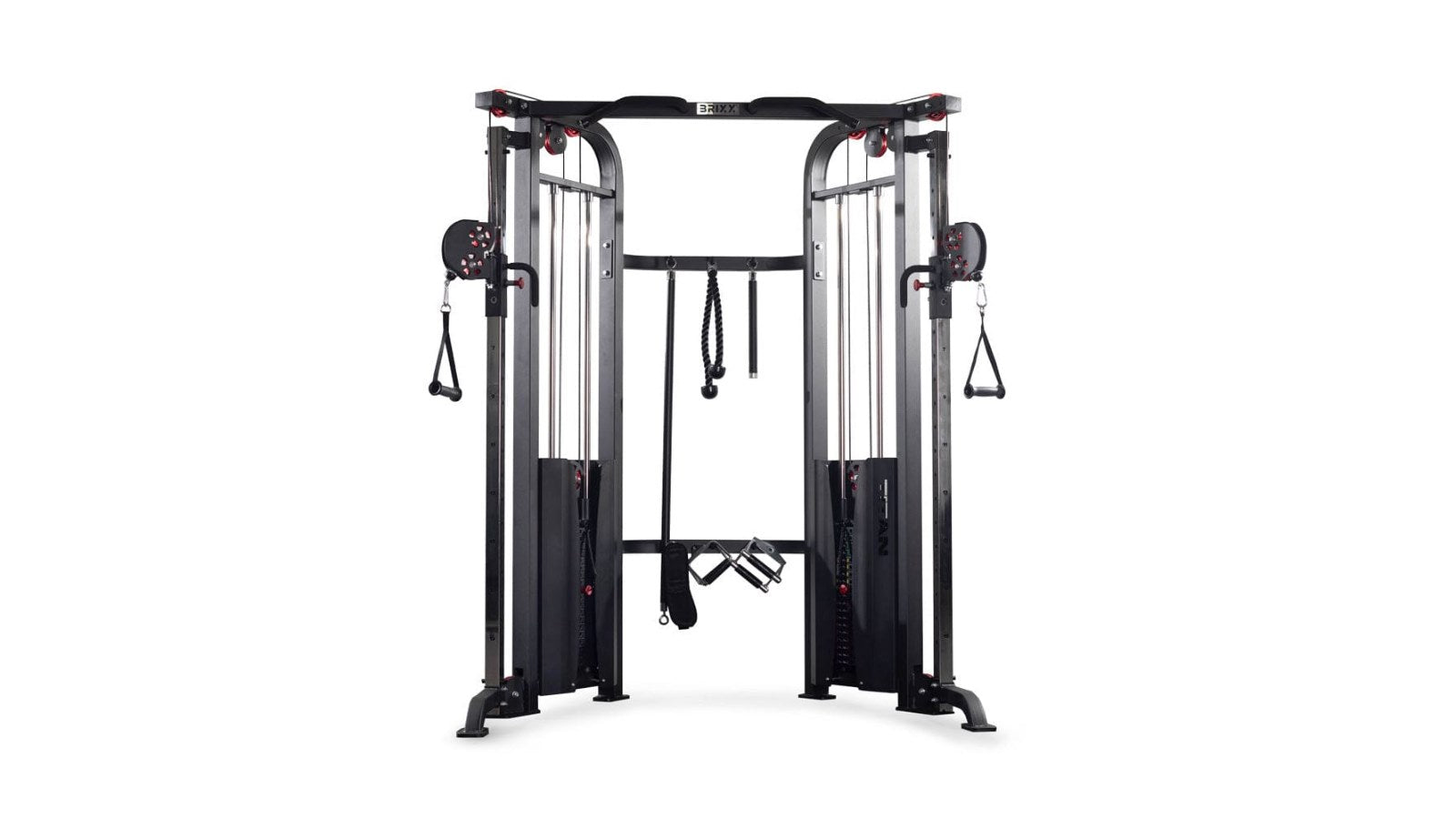
A functional trainer is a versatile addition to any gym. With adjustable cables and a range of resistance options, one machine can support exercises for your chest, back, shoulders, arms and core. It is a practical choice for home gyms, personal training studios and commercial fitness facilities.
But with different models, weight stacks and pulley systems available, choosing the right functional trainer can be confusing. A machine with a heavier weight stack is not necessarily the better option, and more attachments do not always mean more value.
The right choice comes down to how you train, how much space you have and what you need the machine to do.
In this guide, we explain the key features to compare, common buying mistakes and how to find a functional trainer that suits your gym.
What Is a Functional Trainer?
A functional trainer is a cable-based strength training machine, usually featuring two adjustable pulleys. Depending on the design, resistance comes from integrated weight stacks or weight plates.
The adjustable cables allow you to change the height and direction of resistance, making it possible to perform a variety of exercises without moving between different machines.
Common exercises include:
- Cable chest flyes
- Standing cable rows
- Biceps curls and triceps pushdowns
- Lateral raises
- Cable woodchops
- Pallof presses
- Cable pull-throughs
- Single-arm presses and rows
For a home gym, this versatility can make a functional trainer a practical alternative to buying several separate cable machines. In a commercial gym, it gives members more exercise options from a single station.
It does not replace every piece of strength equipment, though. If your training includes heavy barbell squats, deadlifts or bench presses, you may still need a rack, barbell and bench.
Before you buy: Think about the exercises you perform most often and the equipment you already own. This will help you decide which functional trainer features are worth paying for.
Pin-Loaded vs Plate-Loaded Functional Trainers
One of the first things to consider when buying a functional trainer is how it provides resistance. Most models use either integrated weight stacks or weight plates.
Pin-Loaded Functional Trainers
Pin-loaded machines have built-in weight stacks. You select the resistance by inserting a pin at the required weight.
The main advantage is convenience. Changing resistance takes only a few seconds, which is useful when moving between exercises or sharing equipment with other people.
A pin-loaded functional trainer can be a good choice for home gyms, personal training studios and commercial facilities where quick adjustments matter.
When comparing models, check the weight available on each side, the size of the resistance increments and the pulley ratio. These details affect how much resistance you can use during training.
Plate-Loaded Functional Trainers
Plate-loaded machines use weight plates instead of integrated stacks. They may suit people who already own compatible plates and prefer to use their existing equipment.
The trade-off is that changing resistance takes longer. You will also need space to store the plates.
Some plate-loaded models include additional cable stations for exercises such as lat pulldowns and seated rows. Check the individual design before buying, as these features are not available on every machine.
Which Type Should You Choose?
| Your requirements | Option worth considering |
|---|---|
| Quick and convenient weight changes | Pin-loaded functional trainer |
| You already own compatible weight plates | Plate-loaded functional trainer |
| Several people will share the machine | Pin-loaded trainer for easier adjustments |
| You want dedicated lat pulldown and seated row stations | A model with additional cable stations |
If you prefer integrated weight stacks, compare the BRIXX Functional Trainer. If you already own compatible plates, the BRIXX Plate Loaded Functional Trainer is another option to consider.
The best choice depends on your training requirements, available space and budget.
Understanding Pulley Ratios and Resistance
Pulley ratio is one of the most important specifications to understand when comparing functional trainers.
It affects how much resistance you feel at the handle and how far the cable travels. This is why comparing machines by weight stack alone can be misleading.
What Does a 2:1 Pulley Ratio Mean?
With a typical 2:1 pulley system, the handle travels approximately twice the distance of the weight stack. In return, the resistance felt at the handle is approximately half the selected stack weight, before accounting for friction and other mechanical factors.
For example:
| Selected weight stack | Approximate resistance at the handle |
|---|---|
| 20 kg | 10 kg |
| 40 kg | 20 kg |
| 60 kg | 30 kg |
| 80 kg | 40 kg |
| 90 kg | 45 kg |
These are illustrative calculations rather than measured resistance figures for a particular machine.
With a typical 1:1 pulley system, resistance at the handle is closer to the selected stack weight, while the handle travels approximately the same distance as the weight stack.
Neither ratio is automatically better. A 2:1 system provides more cable travel, which can be useful for movements such as cable flyes. A 1:1 system can provide more resistance at the handle for the same selected weight.
What Does This Mean When Buying a Functional Trainer?
Consider two machines with different weight stacks and pulley configurations. The machine with the larger stack may not provide proportionally more resistance at the handle.
For example, the BRIXX Functional Trainer lists dual 90 kg weight stacks and a 2:1 pulley ratio. With this configuration, the approximate resistance at a single handle is half the selected stack weight.
The BRIXX Plate Loaded Functional Trainer has a different setup, with 2:1 side pulleys and dedicated high and low stations listed with a 1:1 ratio.
Our advice: Check the pulley ratio alongside the weight stack before comparing functional trainers. This gives you a clearer idea of the resistance available for your preferred exercises.
How Much Weight Do You Need?
The amount of resistance you need depends on your strength, training experience and the exercises you plan to perform.
Lateral raises, for example, generally require less resistance than many rowing exercises. Your machine should offer enough resistance for your current training while leaving room for progression.
Before buying, consider:
- Your training level: Choose a resistance range that suits your current ability.
- Future progression: Think about whether the machine will continue to meet your needs as you get stronger.
- Weight increments: Smaller increments can make gradual progression easier.
- Pulley ratio: Check how much resistance reaches the handle.
- Number of users: A machine shared by several people may need to accommodate different strength levels.
You do not necessarily need the heaviest weight stack available. Focus on whether the machine provides suitable resistance for the movements you intend to perform.
Pulley Adjustment and Cable Travel
Adjustable pulleys allow you to change the direction of resistance for different exercises.
A high pulley is useful for triceps pushdowns, while a lower position can work well for certain curls and other cable movements. Different pulley heights also help you set up exercises such as chest flyes and rotational movements.
When comparing functional trainers, look at the adjustment range, how securely the pulleys lock into place and whether the cables provide enough travel for your intended exercises.
Ease of adjustment matters too. If you regularly switch between exercises or share the machine with others, a system that is simple to reposition can make training more convenient.
More adjustment positions can offer greater flexibility, but the number alone does not determine how well a machine performs.
Before purchasing: Make a list of your regular cable exercises and check that the machine can accommodate the required pulley heights and range of motion.
Which Attachments Do You Need?
Attachments expand the number of exercises you can perform, but you do not need every accessory available.
Start with the movements you expect to use regularly.
| Attachment | Common uses |
|---|---|
| Single handles | Rows, cable presses, curls and lateral raises |
| Triceps rope | Triceps pushdowns and selected face pull variations |
| Straight bar | Certain curls and pushdowns |
| Long bar | Selected rowing and pulldown movements |
| Ankle straps | Cable-based hip and leg exercises |
Check which attachments are included with the machine and which cost extra. It is also worth confirming that the attachments are compatible with the cable system.
For home users, included accessories can reduce additional costs. In a commercial gym, durability and the availability of replacements may be more important.
How Much Space Does a Functional Trainer Need?
A functional trainer's listed dimensions tell you how much floor space the machine occupies, but not how much room you need to exercise comfortably.
You will also need clearance to stand in front of the machine, extend your arms and move without hitting walls or other equipment.
The BRIXX Functional Trainer listing gives the following dimensions:
| Measurement | Listed dimension |
|---|---|
| Height | 208 cm |
| Width | 163 cm |
| Depth | 112 cm |
These are the machine's listed dimensions, not the full training area required.
Before purchasing, also consider ceiling height, delivery access, room for a bench and clearance around other equipment.
If you are setting up a garage gym, measure your available floor space and ceiling height before ordering. For a commercial gym, consider how the machine will fit into the wider floor plan.
If you are planning an entire training facility, BRIXX also offers commercial gym fitout services.
Construction, Maintenance and Warranty
A functional trainer used occasionally at home has different demands from one used throughout the day in a commercial gym.
Before buying, check the following:
Frame and stability: Look for clear construction specifications and a stable design suited to your intended use.
Cables and pulleys: Check the cable system, maintenance requirements and availability of replacement parts.
Adjustment mechanisms: Moving components should operate smoothly and lock securely.
Warranty: Review the coverage for the frame, cables, pulleys and other components. Home and commercial use may have different warranty conditions.
After-sales support: Confirm whether servicing and replacement parts are available in Australia.
Do not rely on terms such as "commercial grade" alone. Review the specifications and warranty conditions, particularly if you are buying equipment for a personal training studio or commercial gym.
Compare Functional Trainers Before You Buy
Once you understand your training requirements, compare the available machines based on resistance, features, space and overall value.
| Model | Main consideration | May suit |
|---|---|---|
| BRIXX Functional Trainer | Dual 90 kg stacks and adjustable pulleys | Buyers who prefer integrated weight stacks |
| SHUA Functional Trainer | Dual 65 kg stacks and 30 resistance levels, as listed | Buyers comparing pin-loaded options |
| BRIXX Plate Loaded Functional Trainer | Plate-loaded side pulleys and additional cable stations | Buyers who already own compatible plates |
Product specifications, included accessories, warranty conditions and prices can change, so check the current listings before making a decision.
Which Functional Trainer Suits Your Gym?
For a home gym: Prioritise suitable resistance, convenient adjustments and dimensions that fit your available space.
For a personal training studio: Look for flexible pulley positions, easy resistance changes and construction suited to regular use by different clients.
For a commercial gym: Consider durability, warranty coverage, maintenance support and how the machine fits into your wider strength training area.
If you are equipping an entire facility, think about how the functional trainer will complement your racks, benches, dumbbells and other equipment rather than selecting each item separately.
Functional Trainer Buying Checklist
Before making your purchase, confirm that:
- The machine fits your available floor space and ceiling height.
- There is enough clearance for your intended exercises.
- The resistance system suits your training needs.
- You understand the pulley ratio and resistance at the handle.
- The adjustment range and cable travel suit your movements.
- The included attachments cover your regular exercises.
- The machine is appropriate for your expected usage.
- The warranty and maintenance requirements are clear.
- Replacement parts and support are available.
- Delivery and installation requirements are confirmed.
This checklist will help you compare functional trainers based on practical value rather than relying on a single specification.
Frequently Asked Questions
Is a functional trainer worth buying for a home gym?
A functional trainer can be a worthwhile addition if you regularly perform cable exercises and want several movement options in one station. Whether it is the right investment depends on your training program, available space and existing equipment.
Is a functional trainer better than a cable crossover?
The terms can overlap, and designs vary. A functional trainer typically has adjustable pulleys for a wide range of cable movements, while a cable crossover commonly features two cable stations positioned farther apart. Compare the actual features, resistance system and dimensions before choosing.
What does a 2:1 pulley ratio mean?
A 2:1 pulley ratio generally means the handle travels twice the distance of the weight stack, while the resistance at the handle is approximately half the selected stack weight.
Can a functional trainer replace free weights?
A functional trainer supports many resistance exercises, but it does not necessarily replace barbells, dumbbells, racks or benches. Consider how it fits into your complete training program.
How should I maintain a functional trainer?
Follow the manufacturer's maintenance instructions. Inspect cables, pulleys and adjustment mechanisms regularly, clean the equipment as recommended and arrange servicing when required. Stop using the machine if a cable is damaged or a component appears unsafe.
Find the Right Functional Trainer for Your Gym
The right functional trainer should suit your exercises, resistance requirements, available space and expected usage.
Compare pulley ratios, resistance at the handle, adjustment range, dimensions and warranty before deciding.
Explore the BRIXX Fitness functional trainer collection to compare available models and find an option that suits your gym.
Shop the gear in this post
 BRIXX Functional Trainer
$2,250.00
View product
 BRIXX Plate Loaded Functional Trainer
$995.00
View product
 SHUA Functional Trainer
$1,950.00
View product