


Best Home Gym Equipment for Glute Training: Exercises and Setup Guide
You don't need a commercial gym to build strong glutes. A bit of floor space, a couple of key pieces of equipment and a handful of well chosen exercises will get you a long way. In this guide we'll look at the best home gym equipment for glute training, walk through five glute exercises you can do at home, and show you how to put them together into a simple home glute workout.

Why Your Glutes Are Worth Training
Your glutes do a lot of work you probably don't think about. They help you walk, climb stairs, get up off the couch and pick things up off the floor. They also help control your hips, which matters for almost every lower body movement in the gym.
So training them isn't only about how they look. Stronger glutes can make squats, deadlifts and lunges feel more solid, and they play a big part in running, jumping and lifting.
And you can do plenty at home. Bodyweight exercises are a good place to start. Once those get easy, dumbbells, a barbell and a sturdy bench let you keep adding challenge as you get stronger. If you'd like to read more about the research behind glute training, the American Council on Exercise has a good overview.
5 Glute Exercises You Can Do at Home
Each of these works your glutes along with other muscles in your legs and hips. Pick a weight you can control, get the technique right first, and only then start adding load.
1. Glute Bridges

If you're new to glute training, start here. Glute bridges need almost no space, no equipment, and they teach you what it feels like to drive through your hips.
How to do them:
- Lie on your back with your knees bent and feet flat on the floor, about hip width apart.
- Rest your arms by your sides and brace your core.
- Push through your feet and lift your hips until your shoulders, hips and knees are roughly in a straight line.
- Squeeze your glutes at the top for a moment. Don't over-arch your lower back.
- Lower slowly and repeat.
Start with bodyweight. When that feels easy, rest a dumbbell across your hips (a folded towel underneath makes it a lot more comfortable).
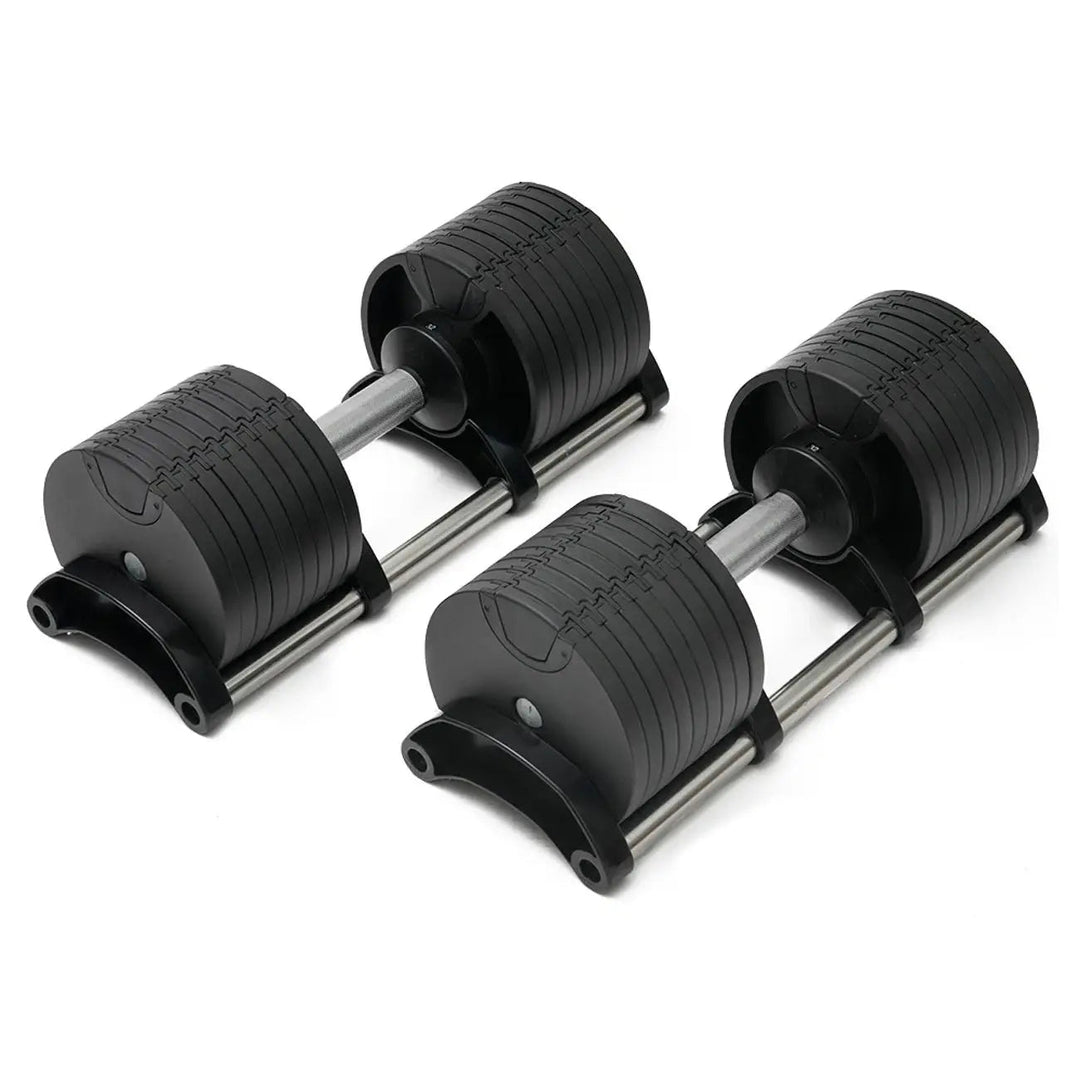
Equipment: A mat is all you need to begin. A single dumbbell is the easiest way to make bridges harder, and adjustable dumbbells are handy here because one pair covers a wide range of weights without taking over the room.
2. Squats

Squats work your glutes, quads and the rest of your lower body together. They're also easy to progress: bodyweight first, then dumbbells, then a barbell if you want to go heavier.
How to do them:
- Stand with your feet about shoulder width apart, toes turned out slightly if that's comfortable.
- Keep your chest up and brace your core.
- Bend at the hips and knees and sit back as if you're lowering onto a chair.
- Go as low as you can while staying in control.
- Push through your whole foot to stand back up.
Let your knees follow the direction of your toes. How deep you go depends on your mobility, so don't force it. Depth tends to improve with practice.
Equipment: Bodyweight squats are a fine starting point, and holding a dumbbell at your chest (a goblet squat) adds load without much setup. If you want to squat heavy, you'll eventually want one of our barbells and a squat rack to go with it.
3. Dumbbell Romanian Deadlifts

Romanian deadlifts (RDLs) hit your glutes and hamstrings through a hip hinge. They're one of the best ways to learn to move from your hips while keeping the weight close to your body.
How to do them:
- Stand holding a dumbbell in each hand in front of your thighs.
- Set your feet about hip width apart with a slight bend in your knees.
- Push your hips back and let the dumbbells slide down close to your legs.
- Stop when you feel a stretch in your hamstrings, while your back is still flat and controlled.
- Drive your hips forward to stand up tall, keeping the weights close the whole way.
A cue that helps: think "hips back", not "squat down". Use light weights until the movement feels natural. NASM has a step-by-step dumbbell RDL guide if you want another reference.
Equipment: Dumbbells work well at home because you can add weight as you get stronger. A barbell is another option if you've got the room and you're comfortable with barbell technique.
4. Hip Thrusts

Hip thrusts are a favourite for glute training, and for good reason. They're similar to a glute bridge, but with your upper back up on a bench you get a bigger range of movement.
How to do them:
- Sit on the floor with your upper back against the side of a sturdy bench.
- Bend your knees and plant your feet flat on the floor.
- If you're using weight, rest a padded barbell or a dumbbell across your hips.
- Drive through your feet and lift your hips until your torso is roughly parallel to the floor.
- Pause at the top with your ribs down. Avoid arching your back to get higher.
- Lower under control and repeat.
Practise without weight first. And check the bench before you start. It shouldn't slide or tip when you push against it.
Equipment: A stable weight bench makes hip thrusts much easier to set up. Start with bodyweight, then add a dumbbell or barbell as your strength and technique improve.
5. Reverse Lunges

Reverse lunges train one leg at a time, so you work your glutes while also testing your balance. They're also a good way to pick up any difference in strength between your left and right side.
How to do them:
- Stand tall with your feet about hip width apart.
- Step one foot back and lower by bending both knees.
- Keep your front foot planted and your front knee in line with your toes.
- Go down to a depth where you still feel balanced.
- Push through your front foot to come back up.
- Swap sides.
Use bodyweight until you feel steady, then hold a dumbbell in each hand.
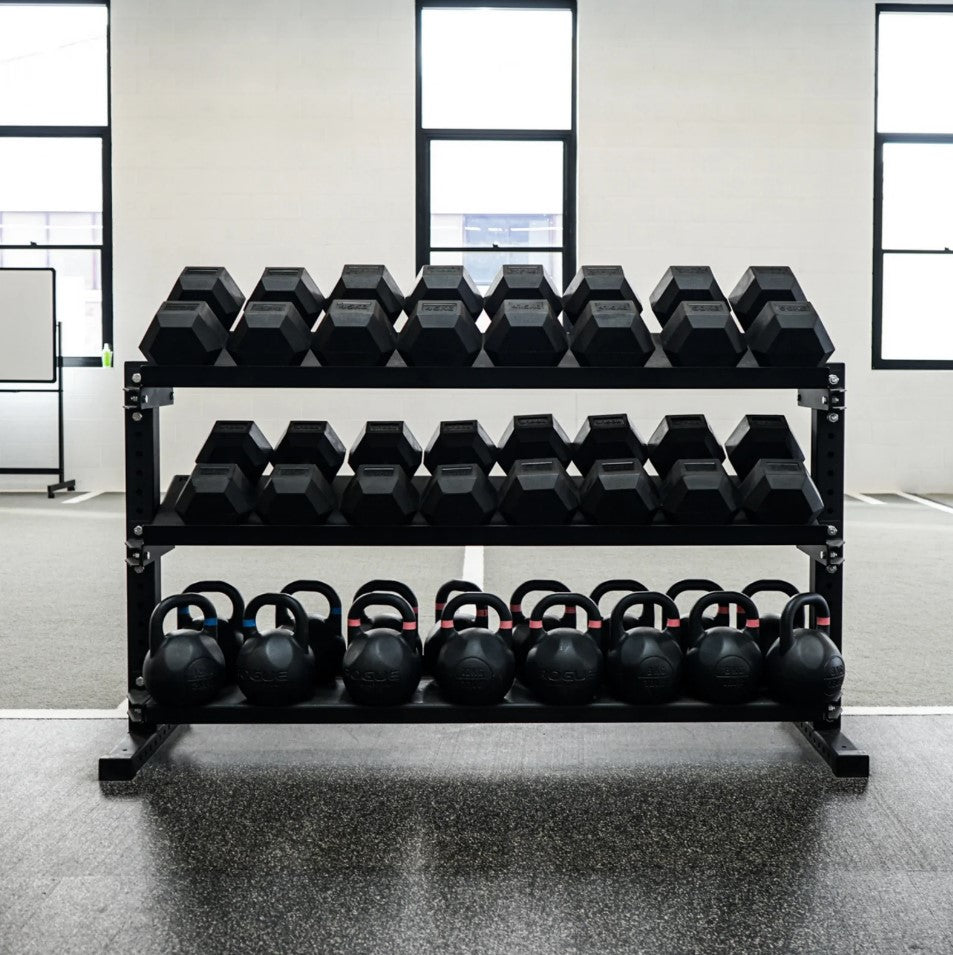
Equipment: Dumbbells are the simplest way to load lunges, and you'll use the same pair for squats and RDLs too. If you're building a proper strength corner, hex dumbbell and rack sets keep a full range of weights tidy and in one spot.
Sample Home Glute Workout
Here's one way to put the five exercises together. New to strength training? Go lighter and do fewer sets until the movements feel familiar.
| Exercise | Sets | Reps |
|---|---|---|
| Dumbbell Romanian deadlifts | 3 | 8 to 12 |
| Squats | 3 | 10 to 12 |
| Hip thrusts | 3 | 10 to 15 |
| Reverse lunges | 2 | 8 to 10 per leg |
| Glute bridges | 2 | 12 to 15 |
A few tips to get more out of it:
- Rest between sets. Around 60 to 120 seconds is about right. Take longer if you need it to keep your technique clean.
- Pick a weight that challenges you. The last few reps of each set should feel hard, but not so hard that your form falls apart.
- Progress a little at a time. Once you can hit all your reps comfortably, add a small amount of weight or slow the movement down.
- Give yourself time to recover. If you're training your glutes hard, space your sessions out. Two good sessions a week is a sensible starting point for most beginners.
- Stick with it. There's no need to change the workout every week. Small improvements in weight, reps or control add up.
Adjust the plan to suit your fitness level, the equipment you have and how well you're recovering. If an exercise causes pain, stop and check your technique before carrying on.
Choosing the Best Home Gym Equipment for Glute Training
What you need depends on your experience, your space and your budget. You don't need a room full of glute training equipment. Most people do best starting with a few versatile pieces and adding more as their training grows.
| Your goal | What to consider | Why it helps |
|---|---|---|
| Get started | Bodyweight and a mat | Learn the exercises without buying weights |
| Add resistance | Adjustable dumbbells | Load squats, lunges, RDLs and bridges |
| Lift heavier | Barbell and weight plates | More weight for squats and hip thrusts |
| Add hip thrusts | A stable weight bench | Supports your upper back |
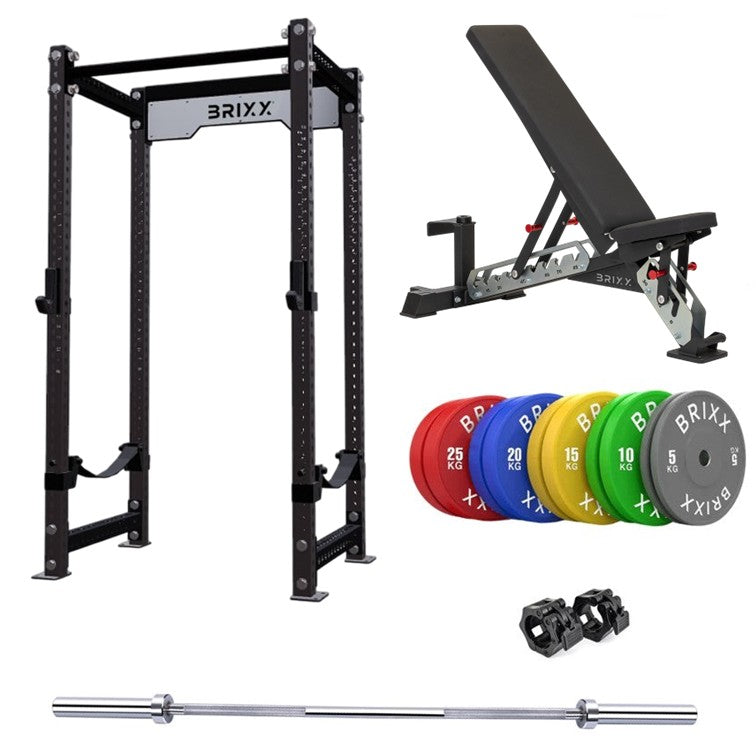
| Build a full setup | Squat rack and barbell | Safer heavy barbell training |
You don't have to buy it all at once. If you're starting from scratch, dumbbells for glute training are the easiest first buy, since one pair covers most of the exercises in this guide.
As you get stronger, you can decide whether a bench, barbell, plates or a rack is worth adding. A glute ham developer (GHD) is a more specialised machine and isn't something you need for a solid home glute workout.
If you do want machine options later, such as a GHD, a hip abductor or a leg press and hack squat, browse our leg machines.
Building Your Home Glute Workout
A good glute workout at home comes down to a few well chosen exercises and equipment that suits your goals. Glute bridges, squats, Romanian deadlifts, hip thrusts and reverse lunges give you a solid base, and adding resistance over time keeps you progressing.
Start with the moves you can do confidently, train consistently, and add to your setup when your training calls for it. When you're ready, you'll find dumbbells, barbells, plates, benches and racks in our range of home gym equipment, delivered across Australia.
Frequently Asked Questions
Can you build your glutes at home without a gym?
Yes. Glute bridges, squats and reverse lunges are a great start with just bodyweight. As you get stronger, dumbbells or a barbell keep the workouts challenging.
What is the best equipment for glute training at home?
Dumbbells are the best equipment for glute exercises when you're starting out, since you can use them for squats, Romanian deadlifts, lunges and weighted glute bridges. A stable bench and a barbell open up more options later.
Can you build glute muscle with dumbbells?
Yes. Dumbbells give you enough resistance for Romanian deadlifts, squats, reverse lunges and weighted glute bridges. Keep increasing the challenge gradually while holding good technique.
Do you need a glute machine to build your glutes?
No. Bodyweight exercises and free weights train your glutes well. A dedicated glute machine is optional and only worth it if it suits your goals, budget and space.
How often should you train your glutes?
Twice a week is a reasonable starting point for most people. The right amount depends on your experience, how hard you train and how well you recover, so leave enough time between tough sessions.
Is a squat rack necessary for glute training at home?
No. You don't need one for bodyweight or dumbbell training. A rack becomes useful once you start barbell squats and other heavy barbell lifts. Choose equipment that suits where you're at now, and make sure you know how to use it safely.
Shop the gear in this post
 BRIXX Adjustable Dumbbells 36kg
$895.00
View product
 BRIXX Adjustable Dumbbells 32kg - 2.0
$695.00
View product
 BRIXX 32kg Adjustable Dumbbell Sets, Rack and Adjustable Bench Package
$1,295.00
View product