


How to Set Up a Home Gym in a Small Space: Garage, Spare Room & Apartment
You don't need a massive shed or a dedicated gym room to train seriously at home. Some of the best home gyms in Australia are built in single-car garages, spare bedrooms, and even apartment balconies — it just takes a bit of planning.
This guide covers how to set up a home gym in a small space, what equipment actually fits, and how to make the most of whatever room you've got — whether that's a full garage, half a garage, a spare room, or a corner of your apartment.
How Much Space Do You Actually Need?
Less than you think. Here's the minimum you need for the most common setups:
| Setup | Min. Floor Space | Min. Ceiling |
|---|---|---|
| Power rack + bench + barbell | 2.5 × 3 m (~7.5 m²) | 2.3 m+ |
| Squat rack + bench | 2 × 2.5 m (~5 m²) | 2.3 m+ |
| Dumbbells + bench only | 2 × 2 m (~4 m²) | 2.1 m+ |
| Bodyweight + kettlebells | 2 × 2 m (~4 m²) | 2.1 m+ |
The numbers above include clearance around the equipment for loading plates and moving safely. If you can fit a car, you can fit a gym — most single-car garages are about 3 × 6 metres, which is more than enough.
Before You Buy Anything: Measure Three Things
This is where most people go wrong. They order a rack, it arrives, and it doesn't fit through the door — or the pull-up bar hits the ceiling. Save yourself the hassle by measuring these three things first:
- Floor area: Length and width of your available space, in metres. Don't forget to account for anything that stays in the room — shelving, a washing machine, a parked car if you're sharing a garage.
- Ceiling height: Measure to the lowest point — that's usually a garage door track, a beam, or a light fitting, not the ceiling itself. This determines which rack you can use and whether you can press overhead inside it.
- Door clearance: Your equipment has to get into the room. Measure the narrowest doorway or opening. Most racks ship flat-packed, so this is rarely a problem — but a pre-assembled multi-gym might not fit through a standard 820 mm door frame.
Setup 1: The Garage Gym
A garage is the most popular spot for a home gym in Australia, and for good reason — concrete floor, high ceiling, roller door for ventilation, and space you're probably underusing anyway.
Full Garage (3 × 6 m)
You have room for a complete setup: power rack, adjustable bench, barbell, plates, dumbbells, and even a cardio machine or cable system. Place the rack against the back wall, bench in front, and you've still got floor space for deadlifts and accessories.
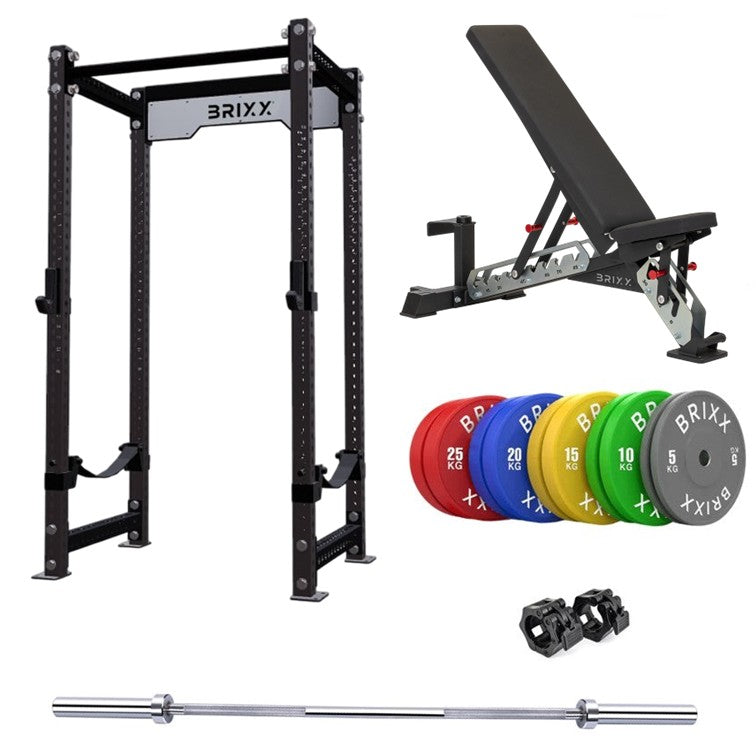
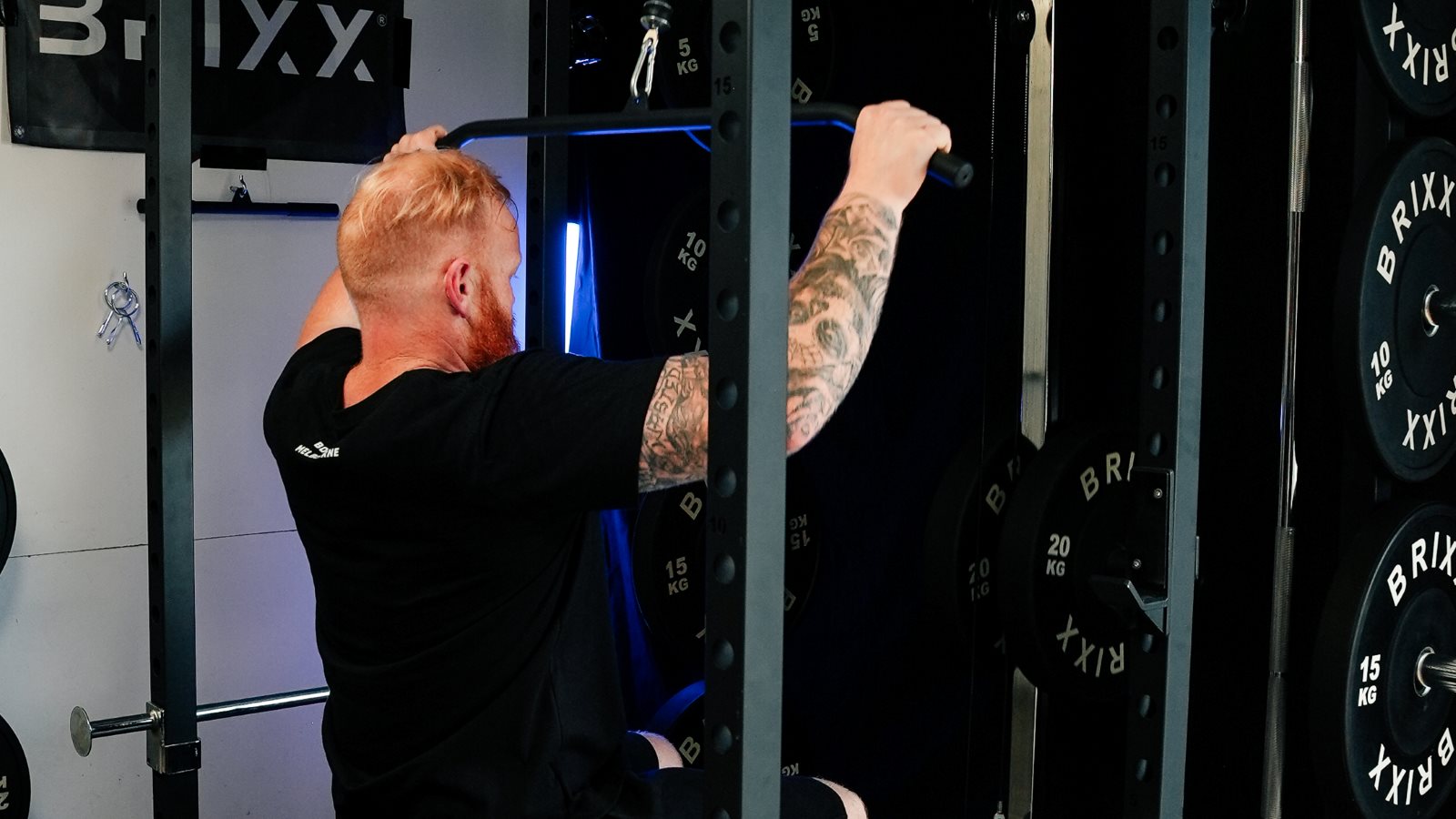
A BRIXX Zeus 3000 ($845) is ideal here — it comes with a lat pulldown, low row, landmine, spotter bars, and storage horns, so one piece of equipment gives you a full training station. Pair it with an Adjustable Power Bench ($420), a barbell ($300), and 100 kg of bumper plates ($765) and you're set for under $2,400.
Half Garage (Sharing with a Car)
Still very workable. You've got roughly 1.5 × 6 metres along one wall — enough for a squat rack or a compact power rack positioned lengthwise.
The BRIXX Colossus Squat Rack ($650) is a strong option here. Its open-back design takes up less depth than a full cage, and you can still squat, bench, and press safely with the included spotter arms. Wall-mounted folding racks are another option if you need to reclaim the floor space entirely when the car's in.
Garage Gym Essentials
- Flooring: Don't train on bare concrete. Interlocking rubber tiles (15 mm thick) protect the slab, dampen noise, and stop your feet slipping. Lay them tight without adhesive — they're easy to remove later.
- Ventilation: Australian garages get brutal in summer. Open the roller door, add a large floor fan, and train early or late. If you're serious, ceiling insulation and a portable air conditioner make a big difference.
- Lighting: One fluorescent tube won't cut it. LED battens are cheap and bright — aim for 300–500 lux over the training area.
- Rust prevention: Wipe down your barbell and rack after sweaty sessions. Keep the garage door closed when you're not training to reduce humidity exposure.
Setup 2: The Spare Room Gym
A spare bedroom, study, or rumpus room can work surprisingly well — especially if you're not planning to squat 200 kg. The main constraints are floor strength, ceiling height, and noise.
What Works in a Spare Room
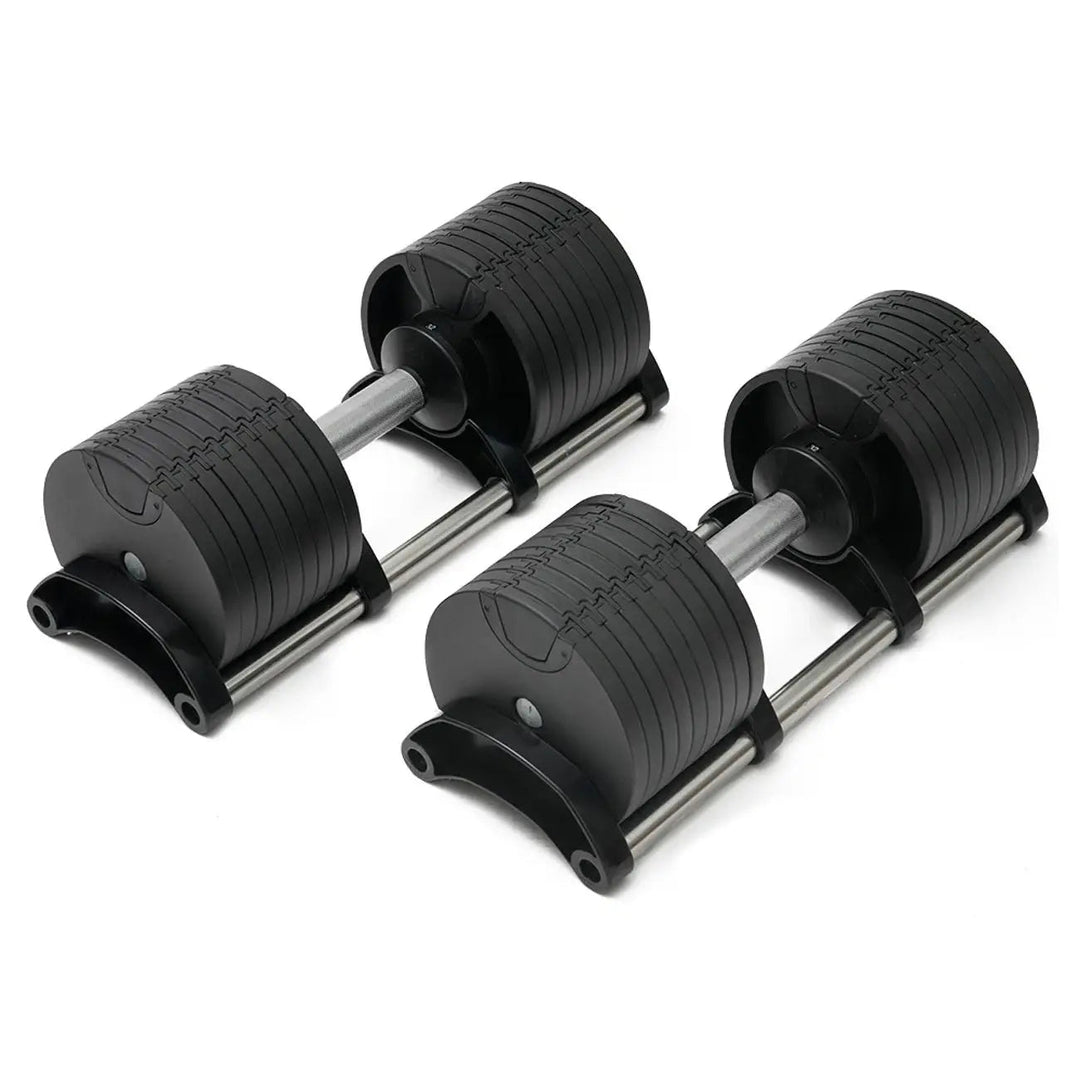
- Adjustable dumbbells: A pair of BRIXX Adjustable Dumbbells (32 kg) ($750) replaces an entire dumbbell rack in a footprint smaller than a shoebox. Press, row, curl, lunge — they cover dozens of exercises.
- Adjustable bench: Folds or stands upright against a wall when not in use.
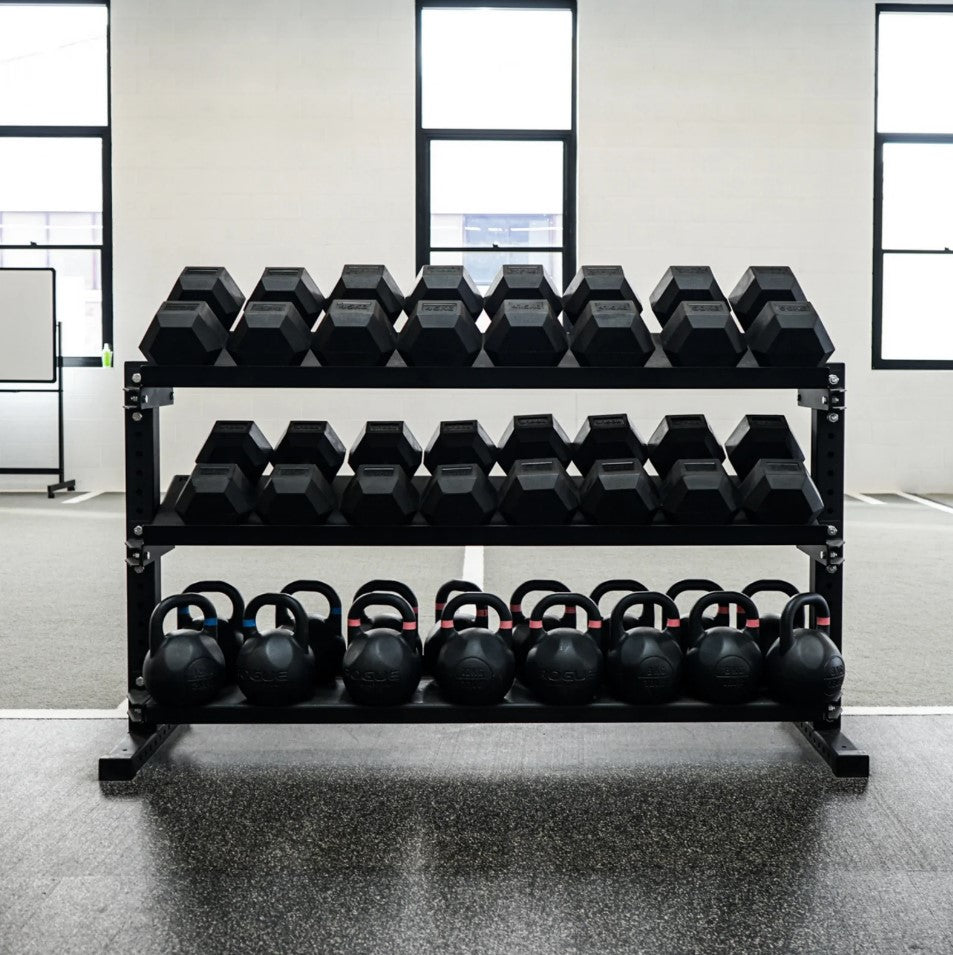
- Resistance bands and kettlebells: Take up almost no space and add serious variety.
- A compact squat rack: If the room is big enough (at least 2.5 × 3 m) and the ceiling is 2.3 m or higher, a squat rack fits. Use bumper plates and control your lifts — no dropping.
Spare Room Considerations
- Floor protection: Timber and carpet floors can't handle a dropped barbell. Use thick rubber mats (at least 15 mm) and keep weights controlled. If you're on an upper storey, stick to dumbbells and bodyweight — the vibration from barbell work travels through the floor.
- Noise: Rubber flooring helps, but the real fix is not dropping weights. Controlled eccentric lifts and bumper plates make a spare room gym viable even in a townhouse.
- Ventilation: Open a window and add a fan. Spare rooms don't have the airflow of a garage.
Setup 3: The Apartment Gym
The most constrained option, but still worth doing. If you have a balcony, a corner of a living area, or even a large wardrobe, you can build a meaningful training setup.
The Apartment-Friendly Essentials
- Adjustable dumbbells — the single best investment for apartment training. One pair covers 5–32 kg and fits under a desk.
- A foldable or flat bench — use it for pressing, rows, step-ups, and hip thrusts, then slide it against a wall or under a bed.
- Resistance bands — attach to a door frame for pull-apart, face pulls, banded squats, and assisted pull-ups. Almost zero footprint.
- A pull-up bar — door-frame mounted, no drilling required. Adds pull-ups, chin-ups, and hanging leg raises to your repertoire.
- A kettlebell or two — swings, goblet squats, Turkish get-ups. One 16 kg and one 24 kg kettlebell covers a lot of ground.
Apartment Rules to Follow
- No dropping anything, ever. Your downstairs neighbour will hear it.
- Rubber mat under everything. Even dumbbells dent timber floors.
- Check your strata rules. Some apartment buildings restrict heavy equipment on upper floors. Worth a quick check before you invest.
- Store smart. Vertical storage is your friend — wall hooks for bands, a rack stand for dumbbells, a corner for the kettlebell.
Compact Equipment That Earns Its Footprint
In a small space, every piece of equipment needs to justify the floor area it takes up. Here's what gives you the best training value per square metre:
| Equipment | Footprint | Exercises | Best For |
|---|---|---|---|
| Adjustable dumbbells | ~0.1 m² | 50+ | Any space |
| Adjustable bench | ~0.5 m² | 30+ | Any space |
| Squat rack | ~1.5 m² | 15+ | Garage / large room |
| Power rack (with cable) | ~2 m² | 40+ | Garage / dedicated room |
| Resistance bands | ~0 m² | 20+ | Anywhere |
| Kettlebell | ~0.05 m² | 15+ | Anywhere |
The standout for small spaces is adjustable dumbbells paired with a bench. Two pieces of equipment, well under 1 m² of floor space, and you can train every muscle group effectively. The BRIXX 32 kg Adjustable Dumbbells ($750) plus an Adjustable Power Bench ($420) gives you a complete setup for $1,170 that fits in a wardrobe.
Layout Tips That Make a Small Gym Feel Bigger
- Put the largest piece against the wall. A rack positioned against the back or side wall opens up the centre for floor work, stretching, and cardio.
- Use vertical storage. Wall-mounted plate holders, barbell hooks, and band pegs keep the floor clear. Most BRIXX racks include built-in storage horns for this reason.
- Multi-use equipment only. If a piece of equipment does fewer than five exercises, it probably doesn't deserve floor space. A power rack with an integrated lat pulldown and low row (like the Zeus 3000) replaces three separate machines.
- Fold what you can. Foldable benches, wall-mounted racks, and collapsible accessories let you reclaim space between sessions.
- Mirror on one wall. It won't make the room bigger, but it'll feel bigger — and it helps you check your squat form without a training partner.
What About Low Ceilings?
Low ceilings are the most common deal-breaker people worry about — and usually the easiest to solve.
- Under 2.3 m: Choose a short-profile rack or a squat rack without a pull-up bar. You won't be able to press overhead inside the rack, but you can press in front of it. The BRIXX Zeus series has an invertible pull-up bar that reduces the overall height for exactly this situation.
- 2.3–2.5 m: Most standard power racks fit. Check the spec sheet — a rack listed at 218 cm (like the Zeus 3000) leaves 12 cm clearance under a 2.3 m ceiling, which is tight but workable.
- 2.5 m+: Full freedom. Any rack, overhead pressing inside the cage, pull-ups without hitting your head.
If you're truly ceiling-limited, adjustable dumbbells and a bench sidestep the problem entirely — no rack needed, no overhead clearance issue.
Sample Builds by Space
The 4 m² Corner (Apartment / Spare Room)
- BRIXX Adjustable Dumbbells 32 kg — $750
- Adjustable Power Bench 2.0 — $420
- Resistance bands — ~$50
- Total: ~$1,220
The 8 m² Half-Garage
- BRIXX Colossus Squat Rack — $650
- Adjustable Power Bench 2.0 — $420
- 20 kg Olympic Barbell — $300
- 100 kg Bumper Plate Package — $765
- Rubber floor tiles — ~$300
- Total: ~$2,435
The 15 m²+ Full Garage
- BRIXX Zeus 3000 Power Rack (incl. lat pulldown, low row, landmine) — $845
- Adjustable Power Bench 3.0 — $425
- 20 kg Olympic Barbell — $300
- 100 kg Bumper Plate Package — $765
- BRIXX Adjustable Dumbbells 32 kg — $750
- Rubber floor tiles — ~$500
- Total: ~$3,585
Small Home Gym FAQs
Can you put a power rack in a spare room?
Yes, if the room is at least 2.5m x 3m with a ceiling of 2.3m or higher. Protect the floor with thick rubber mats and keep your lifts controlled. On an upper storey, dumbbells and bodyweight training are the better choice.
What ceiling height do you need for a home gym?
Allow at least 2.3m for a power rack or squat rack and 2.1m for dumbbells and a bench. Measure to the lowest point, such as a beam, light or garage door track.
What is the best home gym equipment for an apartment?
Adjustable dumbbells are the best single investment because one pair replaces a full rack. Add a bench, resistance bands and a kettlebell or two. See the BRIXX adjustable dumbbells.
What flooring do you need for a small home gym?
Use rubber tiles or mats at least 15mm thick. They protect the floor, reduce noise and stop your feet slipping.
The Bottom Line
You don't need a warehouse to build a home gym that works. A 2 × 2 metre corner with adjustable dumbbells and a bench is enough to train every muscle group. A half-garage with a squat rack opens up serious barbell training. And a full garage with a power rack gives you everything a commercial gym has — minus the commute and the monthly fee.
Measure your space, pick equipment that earns its footprint, and start training. You can always add more later — that's the beauty of building your own gym.
Ready to set up your home gym?
Shop the full BRIXX range at brixxfitness.com.au
Same-day dispatch on orders before 10am AEST, Monday–Friday. Lifetime structural warranty on all racks.
Shop the gear in this post
 BRIXX Zeus 3000 Power Rack
$775.00
View product
 BRIXX Everest Commercial Bench
$690.00
View product
 BRIXX Titan Commercial FID Bench
$550.00
View product