


Power Rack Buying Guide: How to Choose the Right One for Your Home Gym
A power rack is the single most important piece of equipment in any serious home gym. It lets you squat, bench press, overhead press, and rack pull safely — without a spotter. But with hundreds of options on the market, choosing the right one can feel overwhelming.
This guide breaks down exactly what to look for in a power rack so you can invest once and train for years. Whether you're setting up your first garage gym or upgrading from a basic squat stand, we'll walk through the specs that actually matter — and the ones that are just marketing noise.
What Is a Power Rack (and Do You Actually Need One)?
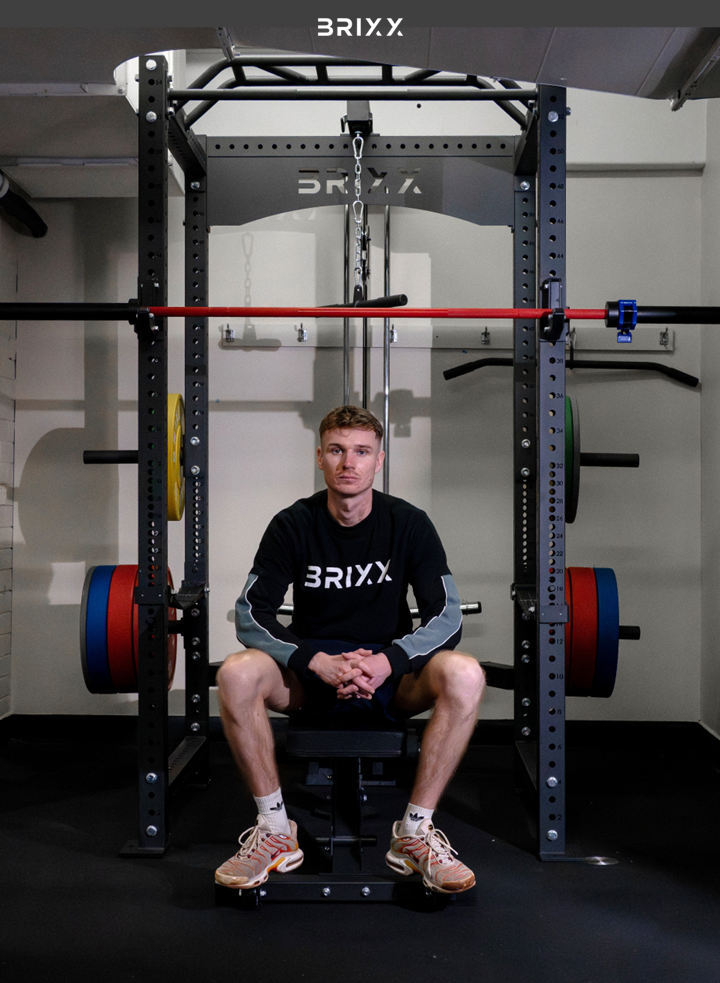
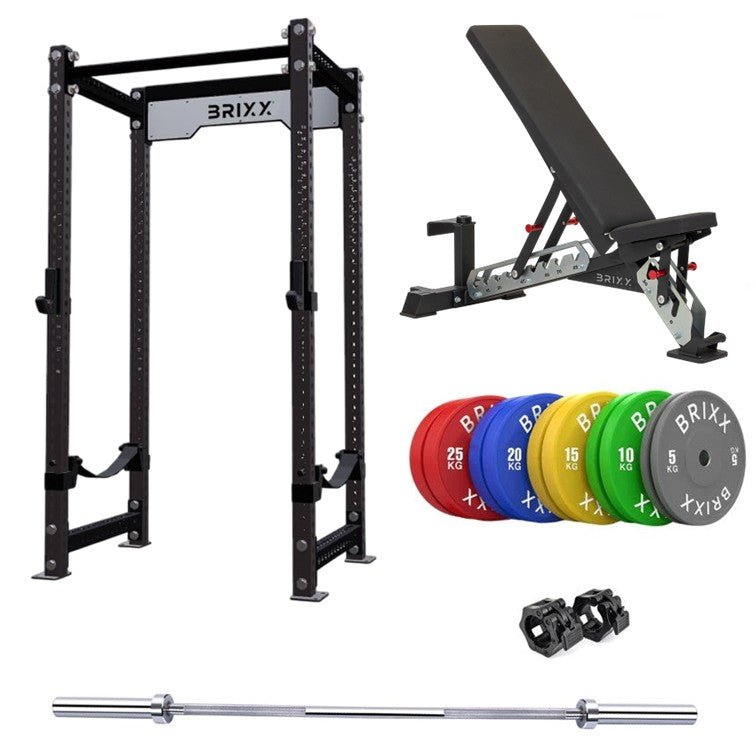
A power rack — sometimes called a squat cage or power cage — is a four-post steel frame with adjustable safety bars or straps. It's designed to let you lift heavy weights safely, catching the bar if you fail a rep. Unlike a squat stand or Smith machine, a full power rack surrounds you on all sides, giving you complete freedom of movement with a built-in safety net.
If you plan to squat, bench, or press anything over 60 kg at home, a power rack isn't optional — it's a safety requirement. It also serves as the anchor point for attachments like lat pulldowns, dip handles, and cable systems, making it the most versatile piece of equipment you can own.
Power Rack vs Smith Machine vs Squat Stand: Which One Should You Buy?
Before diving into specs, it's worth understanding the three main options and what each one does best.
A squat stand is a pair of upright posts. It's affordable and compact, but offers minimal safety — there are no built-in spotter bars, so missed lifts can be dangerous. Best suited for experienced lifters who already know their limits and want a small-footprint option.
A Smith machine guides the barbell along a fixed vertical track. It adds stability and can feel safer, but the fixed bar path doesn't allow your body to move naturally. This can place extra stress on joints over time, particularly during squats. Smith machines also tend to be bulky and expensive.
A power rack is the best of both worlds: full range of motion like free weights, with adjustable safeties that catch the bar if you fail. It's the standard in commercial gyms for a reason — and it belongs in your home gym too.
For most home gym owners, a power rack is the right call. It's safer than a squat stand, more versatile than a Smith machine, and built to grow with you as you get stronger.
The 6 Specs That Actually Matter When Choosing a Power Rack
1. Steel Gauge and Upright Size
The steel construction is what separates a rack that lasts a lifetime from one that wobbles under load. Two numbers matter here: the upright dimensions (the cross-section of the vertical posts) and the steel gauge (the wall thickness).
- 50 × 50 mm uprights with 2 mm steel (14-gauge): The standard for quality home gym racks. Strong enough for lifters loading up to 300+ kg. This is what you'll find in the BRIXX Zeus series.
- 75 × 75 mm uprights with 3 mm steel: Commercial-grade construction. These racks are built for extreme loads and daily heavy use. The BRIXX Mammoth series uses this spec, handling up to 2,000 kg.
Avoid racks with 40 × 40 mm uprights or steel thinner than 1.5 mm — they'll flex under heavy compound lifts and won't hold up over time.
2. Weight Capacity
Weight capacity tells you how much load the rack can safely support. For a home gym, you want a rack rated well above what you currently lift — not just to handle the bar, but to account for dynamic forces when you rack the weight.
- Under 200 kg: Only suitable for very light training. Not recommended.
- 200–400 kg: Good for most home lifters. Covers the range for squats, bench, and rack pulls comfortably.
- 500 kg+: Future-proof and commercial-grade. If you're serious about strength training, this gives you headroom you'll never outgrow.
The BRIXX Zeus series is rated to 325 kg — more than enough for the vast majority of home gym users. The Mammoth series is rated to 2,000 kg, which is genuine commercial-grade territory.
3. Hole Spacing and Pattern
The holes drilled into the uprights determine where you can position your J-hooks and safety bars. Closer spacing gives you finer adjustment, which matters most in the bench press zone where even a couple of centimetres can change your setup.
- Standard spacing (50–76 mm): Perfectly adequate for squats, overhead press, and general use.
- Westside spacing (25 mm in the bench zone): Tighter spacing through the critical bench press range, widening to 50 mm above and below. This is what competition racks use — and what the BRIXX Mammoth series features.
Numbered holes — like the laser-engraved uprights on the BRIXX Zeus — let you quickly dial in your setup without counting from the bottom every time.
4. Footprint and Ceiling Height
Measure your space before you buy. You need the rack's footprint plus enough room on each side to load plates and move around the rack safely.
As a rule of thumb, allow at least 30 cm of clearance on each side and in front. For ceiling height, you need at least 10 cm above the tallest point of the rack. Some racks — like the BRIXX Zeus — have an invertible pull-up bar that can reduce the overall height for low-ceiling garages.
A standard BRIXX Zeus 3000 measures 218 cm tall, 149 cm wide, and 125 cm deep. A Mammoth 2000 is taller at 229 cm but has a slightly narrower 116 cm depth. Always check the specific model's dimensions against your space.
5. J-Hooks and Safety System
Your J-hooks hold the bar at the start of each lift, and your safeties catch it if something goes wrong. Both should be lined with a protective material — UHMW plastic or TPE rubber — so they don't chew up your barbell's knurling.
The two main safety options are solid steel spotter arms and adjustable safety straps. Spotter arms are simpler and bombproof; straps are quieter and gentler on the bar if you do need to bail. The BRIXX Mammoth series includes both pin-pipe safeties and safety straps, giving you the choice.
6. Attachments and Expandability
A good power rack is a platform, not a finished product. The attachments you can add over time — lat pulldown, cable row, dip handles, landmine, plate storage — are what turn a rack into a complete home gym.
Before you buy, check what's included and what's compatible. Some racks come bare and charge extra for every accessory. Others, like the BRIXX Zeus 3000, include a lat pulldown, low row, landmine attachment, J-cups, spotter bars, an extension kit with barbell holders, and eight storage horns — right out of the box.
Also consider whether the rack uses a standard hole size that accepts third-party attachments (the most common is 25.4 mm / 1 inch), or a proprietary system that locks you into one brand's ecosystem.
BRIXX Power Rack Comparison: Zeus vs Mammoth
| Spec | Zeus 2000 | Zeus 3000 | Mammoth 2000 | Mammoth 5000 |
|---|---|---|---|---|
| Uprights | 50×50 mm | 50×50 mm | 75×75 mm | 75×75 mm |
| Steel Thickness | 2 mm (14-ga) | 2 mm (14-ga) | 3 mm | 3 mm |
| Weight Capacity | 325 kg | 325 kg | 2,000 kg | 2,000 kg |
| Height | 218 cm | 218 cm | 229 cm | 232 cm |
| Rack Weight | 96 kg | 96 kg | 145 kg | 285 kg |
| Hole Pattern | 76 mm std | 76 mm std | Westside | Westside |
| Lat Pulldown Incl. | Yes | Yes | No | Yes |
| Price (AUD) | $575 | $775 | $1,400 | $2,750 |
| Warranty | Lifetime | Lifetime | Lifetime | Lifetime |
Which Power Rack Is Right for You?
Choosing a power rack comes down to three questions: how much weight will you lift, how much space do you have, and what attachments do you want now or later?
If you're starting out or training with moderate weight (under 200 kg on the bar): The Zeus 2000 gives you a solid rack with a lat pulldown and landmine attachment for under $600. It's the most popular entry point for home gym owners in Australia, and the lifetime warranty means you won't need to replace it.
If you want a fully loaded setup without buying attachments separately: The Zeus 3000 includes the lat pulldown, low row, landmine, extension kit, storage horns, and dual spotter bars. At $775, it's exceptional value for a rack that arrives ready to train.
If you're a serious strength athlete or want commercial-grade equipment: The Mammoth series is built with 75 × 75 mm, 3 mm-thick steel and rated to 2,000 kg. Westside hole spacing, heavy-duty J-hooks, and a modular attachment system mean this rack can handle anything you throw at it — for years.
If you want a complete multi-station gym in one unit: The BRIXX 360 Multi-Gym (from $2,250) combines a power rack frame with an integrated cable crossover, Smith machine, and functional trainer. It's designed for people who want gym-level variety without buying separate machines.
Your Power Rack Buying Checklist
Before you buy, run through this list:
- Measure your available floor space and ceiling height — allow 30 cm clearance on all sides
- Decide your weight class: are you lifting under 200 kg, under 500 kg, or going heavier?
- Check what's included: J-hooks, spotter bars, pull-up bar, plate storage, cable attachments
- Confirm the hole size for future third-party attachment compatibility
- Look for protective linings on J-hooks and safeties (UHMW or TPE) to protect your barbells
- Verify the warranty — a lifetime structural warranty signals confidence in the build
- Factor in shipping: a 285 kg commercial rack needs freight delivery, not parcel post
The Bottom Line
A power rack is a long-term investment in your training. The right one will last decades, keep you safe under heavy loads, and serve as the foundation for every piece of equipment you add later. The wrong one will wobble, limit your progress, and need replacing within a year or two.
Focus on the specs that matter — steel gauge, weight capacity, hole spacing, and included attachments — and buy the best rack your budget allows. With a Lifetime Warranty and same-day dispatch from Melbourne, every BRIXX power rack is designed to be the last rack you'll ever need.
Ready to choose your power rack?