


Home Gym vs Commercial Gym: Which Is Actually Worth It in 2026?
If you've ever done the mental maths on your gym membership — $60 a month, every month, year after year — you've probably wondered whether putting that money into your own equipment would be the smarter move. It's one of the most common questions in the fitness space, and the answer isn't as obvious as either side makes it sound.
This article breaks down the real costs, the hidden expenses nobody mentions, and the lifestyle factors that actually determine which option is worth it for you in 2026.
What Does a Gym Membership Actually Cost in Australia?
According to Canstar Blue's national survey, Australians spend an average of $63 per month on gym memberships — that's $756 per year. But that average hides a wide range depending on the type of gym you join.
- Budget chains (Jetts, Plus Fitness, Anytime): $30–$55/month
- Mid-range (Fitness First, Goodlife): $55–$80/month
- Premium and boutique (F45, CrossFit boxes, PT studios): $80–$200+/month
Over five years, that's $1,800–$12,000 depending on where you train. And that's before you factor in the costs nobody puts on the brochure.
The Hidden Costs of a Gym Membership
- Joining and admin fees: $50–$200 upfront, often repeated if you cancel and rejoin
- Annual maintenance fees: $50–$100/year at many chains
- Fuel and travel: Driving 15–20 minutes each way adds up to $780–$1,560/year in fuel alone
- Time cost: A 60-minute workout becomes 90–120 minutes once you add travel, parking, changing, and waiting for equipment. Over five years at four sessions a week, that's 350–700 hours spent getting to and from the gym — not training
- Parking: $5–$15 per session at CBD and shopping-centre gyms
When you add these up, the real five-year cost of a gym membership in Australia sits closer to $7,600–$12,800.
What Does a Home Gym Actually Cost?
A home gym is a one-time investment. The price depends on how much equipment you want, but here's what realistic setups look like using current Australian pricing:
Starter Setup — Under $1,500
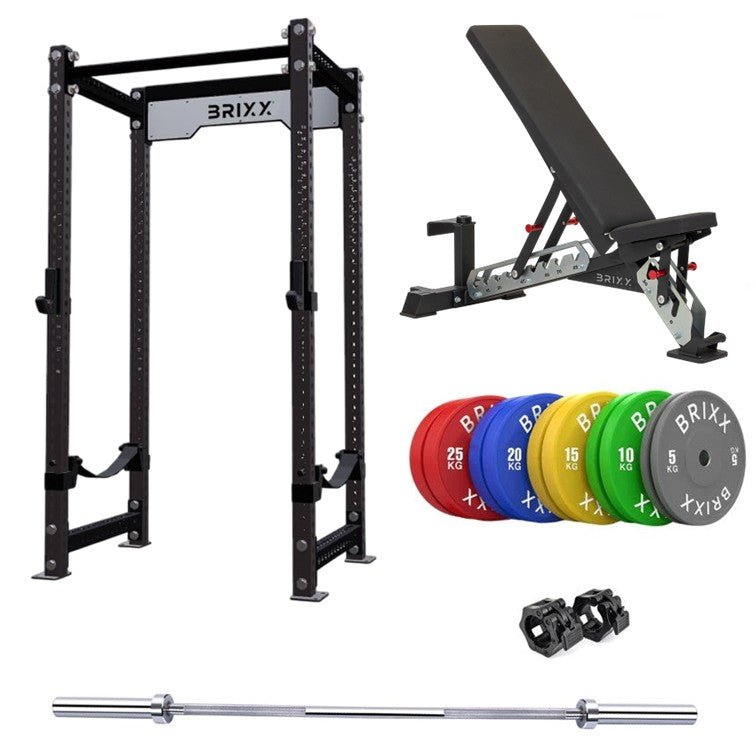
A squat rack, barbell, 100 kg of plates, and a flat bench. This covers squats, bench press, overhead press, rows, and deadlifts — the core movements that build real strength. The BRIXX Colossus Squat Rack at $650 plus a bench and plates gets you there.
Mid-Range Setup — $2,000–$4,000
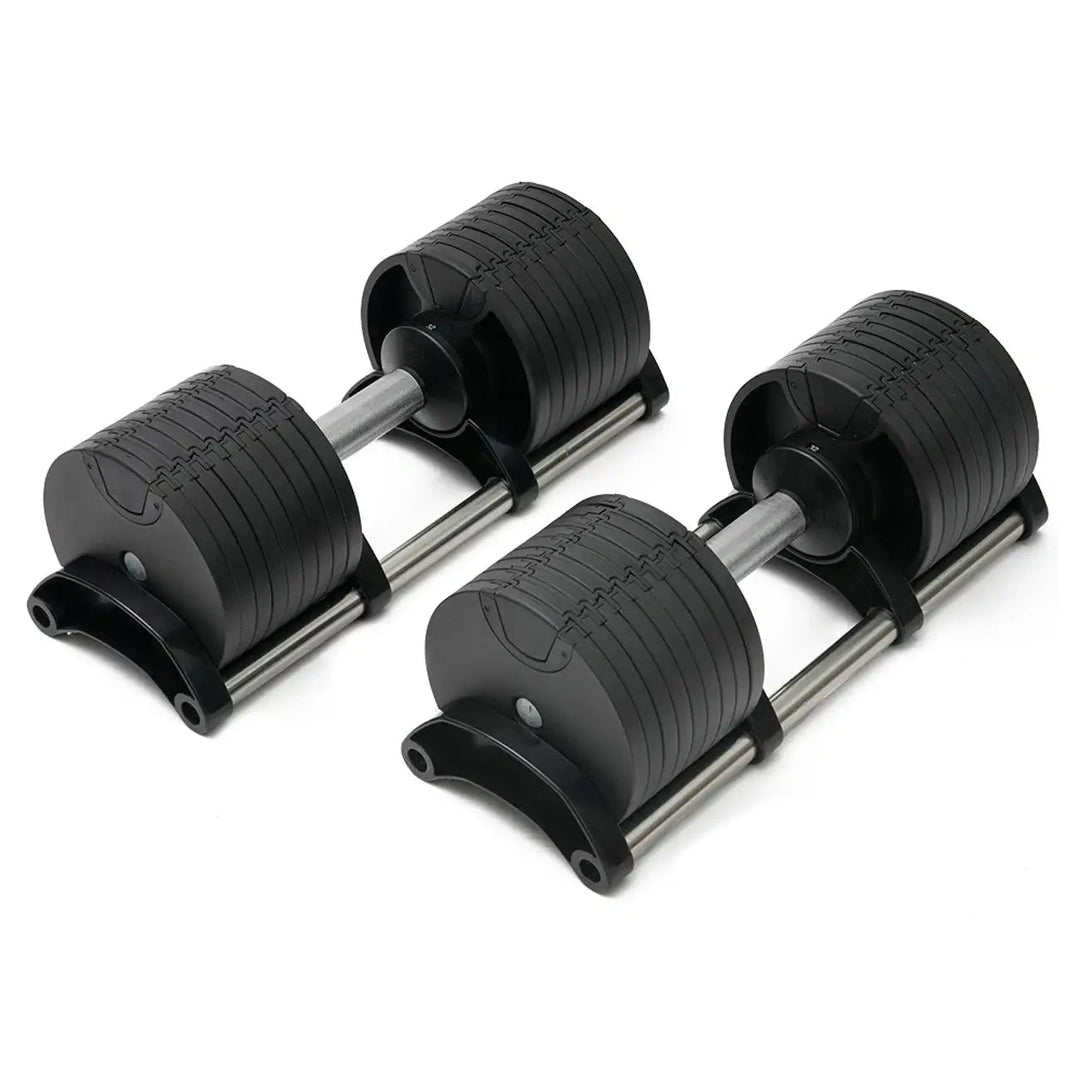
A power rack with lat pulldown and cable attachments, an adjustable bench, Olympic barbell, 100–150 kg of bumper plates, and a pair of adjustable dumbbells. This is where most serious home gym owners land. A BRIXX Zeus 3000 ($775) comes with the lat pulldown, low row, landmine, spotter bars, and storage horns included — so you're not buying accessories piecemeal.
Premium Setup — $5,000–$8,000
Commercial-grade rack, cable system, specialty bars, full plate set, cardio machine, and rubber flooring. The BRIXX Apollo Core Functional Trainer ($3,520) or a Mammoth series rack plus accessories puts you in genuine commercial-gym territory — equipment that will outlast any membership.
The Hidden Costs of a Home Gym
- Flooring: Rubber gym tiles or mats — $400–$1,200 depending on your space
- Electricity: A fan, lighting, maybe a speaker — roughly $5–$10/month
- Additional equipment over time: Most people add $500–$2,000 in extras over five years (dumbbells, bands, specialty bars)
All in, a well-equipped home gym costs $2,500–$9,000 once, with minimal ongoing costs after that.
The Five-Year Cost Comparison
| Gym Membership | Home Gym (Mid-Range) | |
|---|---|---|
| Base cost (5 yrs) | $3,600–$4,800 | $2,500–$4,000 (one-time) |
| Joining/admin fees | $250–$700 | $0 |
| Travel costs | $3,900–$7,800 | $0 |
| Flooring/setup | $0 | $400–$1,200 |
| Extras over time | $0 | $500–$2,000 |
| Realistic 5-year total | $7,600–$12,800 | $3,400–$7,200 |
| Cost in year 6+ | $1,500–$2,500/yr ongoing | ~$0 |
| Resale value | $0 | 40–60% of purchase price |
A mid-range home gym typically breaks even with a gym membership in 3 to 4 years. After that, every session is effectively free. And unlike a membership, your equipment has resale value — quality steel racks and plates hold 40–60% of their value on the secondhand market.
Beyond the Money: Convenience, Consistency, and Results
Cost matters, but it's not the only factor. For a lot of people, the non-financial benefits of a home gym are what seal the deal.
No Commute, No Excuses
Your gym is 10 seconds away. No driving, no parking, no "I'll go tomorrow." Research consistently shows that reducing friction is the single biggest predictor of whether someone sticks to an exercise habit. A home gym removes almost all of it.
Train on Your Schedule
Early morning, late night, during your lunch break, between meetings — it doesn't matter. There are no opening hours, no peak-hour crowds, and no waiting for the squat rack on a Monday evening. Parents with young kids especially benefit: you can train while they nap, without arranging childcare.
Your Music, Your Rules
No earbuds required. Play whatever you want at whatever volume you want. Chalk up without getting a warning. Drop a deadlift without a dirty look. A home gym is your space, set up exactly how you like it.
Consistency Compounds
The best programme is the one you actually do. Home gym owners consistently report higher training frequency — not because they're more motivated, but because there are fewer barriers between them and the barbell. Over months and years, that extra consistency is what drives results.
When a Commercial Gym Is Still the Better Choice
A home gym isn't right for everyone. Be honest about whether any of these apply to you:
- You thrive on social energy. Some people genuinely train harder around other people. If the gym community is what keeps you showing up, that has real value.
- You need specialist equipment. Olympic lifting platforms, competition benches, prowler sleds, swimming pools, saunas — some things don't fit in a garage.
- You don't have the space. A power rack needs roughly 2 × 1.5 metres of floor space plus room around it. If you're in a small apartment with no garage or spare room, a gym membership makes more sense.
- You want coaching. Group classes, personal trainers, and structured programming are easier to access at a commercial gym.
- You're not sure you'll stick with it. If you're brand new to lifting, a few months at a commercial gym first helps you figure out what you enjoy before investing in equipment.
The BRIXX Approach: Buy It Once, Buy It Right
The reason a home gym pays off is that quality equipment lasts. A well-made steel power rack doesn't wear out — it's the same rack in year ten as it was on day one. That's the difference between an investment and an expense.
Every piece of BRIXX equipment is built to that standard. The Zeus series uses 50 × 50 mm, 14-gauge steel with a 325 kg capacity and a lifetime structural warranty. The Mammoth series steps up to 75 × 75 mm, 3 mm-thick steel rated to 2,000 kg — genuine commercial-grade construction you won't outgrow.
And because BRIXX ships from Melbourne with same-day dispatch on orders before 10am AEST, you're not waiting weeks for your equipment to arrive from overseas.
How to Get Started for Under $2,000
If you're ready to make the switch, here's a practical starting point using current BRIXX pricing:
| Item | Price (AUD) |
|---|---|
| BRIXX Colossus Squat Rack | $650 |
| Adjustable Power Bench 2.0 | $420 |
| 20kg Olympic Barbell | $300 |
| 100kg Olympic Bumper Plate Package | $765 |
| Total | ~$2,135 |
That setup covers squats, bench press, overhead press, barbell rows, deadlifts, and dozens of accessory movements. It's a complete strength-training gym — and at $63/month (the national average membership cost), it pays for itself in under three years.
Want more versatility from day one? The Zeus 3000 at $775 adds a lat pulldown, low row, landmine, and storage — still under $2,500 all-in with a bench, bar, and plates.
The Bottom Line
A commercial gym membership is a recurring expense that never builds equity. A home gym is a one-time investment that pays for itself within a few years, saves you hundreds of hours in commuting, and lets you train whenever you want — for the rest of your life.
If you have the space (a garage, spare room, or even a covered carport), building a home gym in 2026 is one of the best financial and lifestyle decisions you can make for your fitness.
Ready to build your home gym?
Shop the full BRIXX range at brixxfitness.com.au
Same-day dispatch on orders before 10am AEST, Monday–Friday. Lifetime structural warranty on all racks.